Commemoration, marketing or other motivation?
Borrowing from abroad in Belfast street-names
Paul Tempan, Martin Magill and Lisa Rea Currie
This is an expanded version of a research paper delivered to the Spring Conference of the Society for Name Studies in Britain and Ireland, Bury St Edmunds, 28 March, 2026.
Abstract
In contrast with rural areas and smaller towns of Northern Ireland, where street-names are primarily rooted in the locality (Mac Aodha, 1998), Belfast presents a different pattern: a substantial proportion of its street-names are borrowed from places abroad (Tempan, 2023). This tendency becomes more pronounced moving from the city centre towards the suburbs. In his articles published in the Belfast Telegraph, John J. Marshall commented on certain groups of such names given in the late 19th century and early 20th century as an act of public commemoration, e.g. those perpetuating the memory of significant battles in the history of the British Empire (Marshall, 1941c); and also on some reflecting a more personal association, e.g. those which recall a tour of the Holy Land made by two business partners, McConnell and Rea, a developer and a builder (Marshall, 1941b).
Building on such observations, this paper examines a set of names derived from places outside Ireland that have received little previous scholarly attention, with particular reference to their origins and naming intentions. To this end, dating evidence is considered and, where possible, the person or organisation proposing the name. Some of the places concerned are in Britain, including many with a literary cachet, such as places connected with Sir Walter Scott or the Lake Poets. Others are on the European continent or further afield. A distinction is made between streets named directly after places abroad, e.g. Lucerne Parade, and those where the name was first borrowed for a house, or other building, before being applied to a street, e.g. Mulhouse Road (from a textile mill). In some cases, further evidence is available from newspaper advertisements which sheds light on the marketing ploys of property developers. Certain names, such as Sydenham, Cliftonville and Balmoral (all borrowed from Britain), gained such traction that they became accepted as the usual name for a district of the city. Some of the key sources are discussed, such as council minutes, street directories and newspaper archives, including online versions of this material.
Introduction
This paper focusses on a particular subset of Belfast’s street-names, namely those whose specific elements (usually the first word) are geographical names not rooted in the locality. These range from place-names in Britain, through continental Europe to further afield on the other continents. Some writers have celebrated the wealth of names from far-flung battle sites, such as Stanley Wilson, who reported this remark: ‘“Do you know,” he said to me, “I have travelled about a good deal, and I don’t believe that any cross-Channel city of size comparable to Belfast has half the number of war names for its streets that this city has”’ (Wilson 1940). Others have seen this as a negative, such as Cathal O’Byrne who commented: ‘From the day the Planters welcomed the Dutch King William, Belfast has given its official loyalties to every country on the face of the earth but the one to which they by right belong’ (O’Byrne 1982:85). The attitude is likely to be influenced by one's politics. However, love it or loathe it, this is undoubtedly a remarkable characteristic of the city. It has even been an inspiration for fiction, e.g. in Ciaran Carson’s The Star Factory, where the repertoire of exotic street-names provides a kind of city-wide playground of the imagination for the young protagonist (Carson 1997).
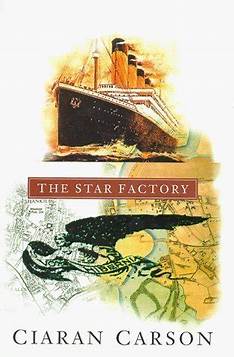 The aim of this paper is to investigate the motivation for the choice of these far-flung place-names, whether that be commemoration, personal association, marketing or other reasons. In some cases, multiple motivations may apply.
The range of sources used include street directories, old Ordnance Survey maps, Irish Historic Towns Atlas, minutes of Belfast Corporation/City Council (particularly the Town Improvement Committee), newspaper archives, etc. The key data which feed into this study are the street-names themselves; the date of naming; person(s) or organisation proposing name; and geographical context, including the names of neighbouring streets. All of these help us to ascertain the likely motivation.
Commemoration: Crimean War (1853-56), Falls / Shankill
Until the late 18th century, street-names were mainly rooted in the locality, named after local landmarks, such as Church Lane (1694), and trades, such as Sugar House Entry (1766). This changed with a trend to honour royalty and nobility, such as Hanover Quay (1788), Donegall Square (1806) and Adelaide Street (1843). Some of the first street-names derived from places beyond Belfast and its hinterland were commemorative names recalling battles and empire. The first conflict which led to a substantial group of commemorative street-names was the Crimean War of 1853-56. These streets ran between Falls Road and Shankill Road. Not all of these remain today. Those which have been cleared are marked with a dagger †.
Sevastopol Street / Sráid Seibheástopol (Siege of Sevastopol, Oct 1854 – Sep 1855, name approved 1856, Irish language name 2008)
†Balaklava/Balaclava Street (Battle of Balaclava, Oct 1854, first recorded 1856, Henderson’s Directory)
†Alma Street (Battle of Alma, Sep 1854, approved 1855)
†Inkerman Street (Battle of Inkerman, Nov 1854, approved 1856)
Odessa Street / Sráid Odása (Bombardment of port of Odessa, April 1854, approved 1874, Irish language name 2008)
John J. Marshall, “Empire Battle Memories”, Belfast Telegraph, 07/03/1941
Nigel Henderson, “Admirals, Generals and Battles”, lecture, 16/04/2026, www.belfaststreetnames.com
Other names related to Crimean War honour military leaders: †Raglan Street, Cardigan Drive, †Omar Street.
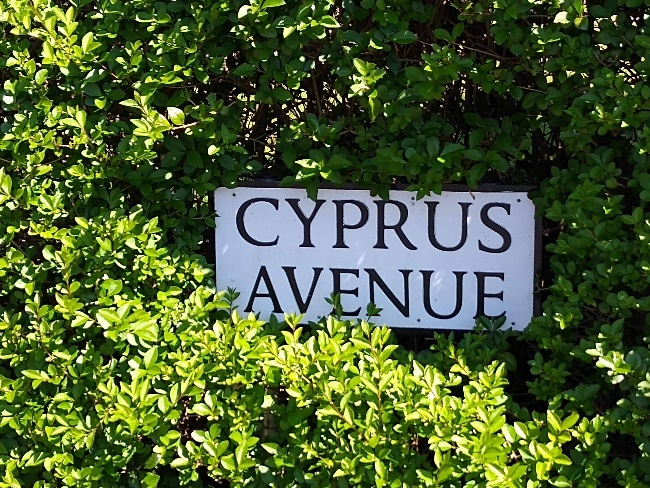 This has been followed by many other street-names commemorating battles, such as Somme Drive and the rest of the “Cregagh Colony”, named after battles of World War I; Montgomery Road and Alanbrooke Road honour military leaders of World War II. Expansion of the British Empire was commemorated with names such as Cyprus Avenue (approved 1901), one of several streets recalling the Cyprus Convention of 1878 under which the Ottoman Empire ceded the island to Great Britain (Marshall, 1941c).
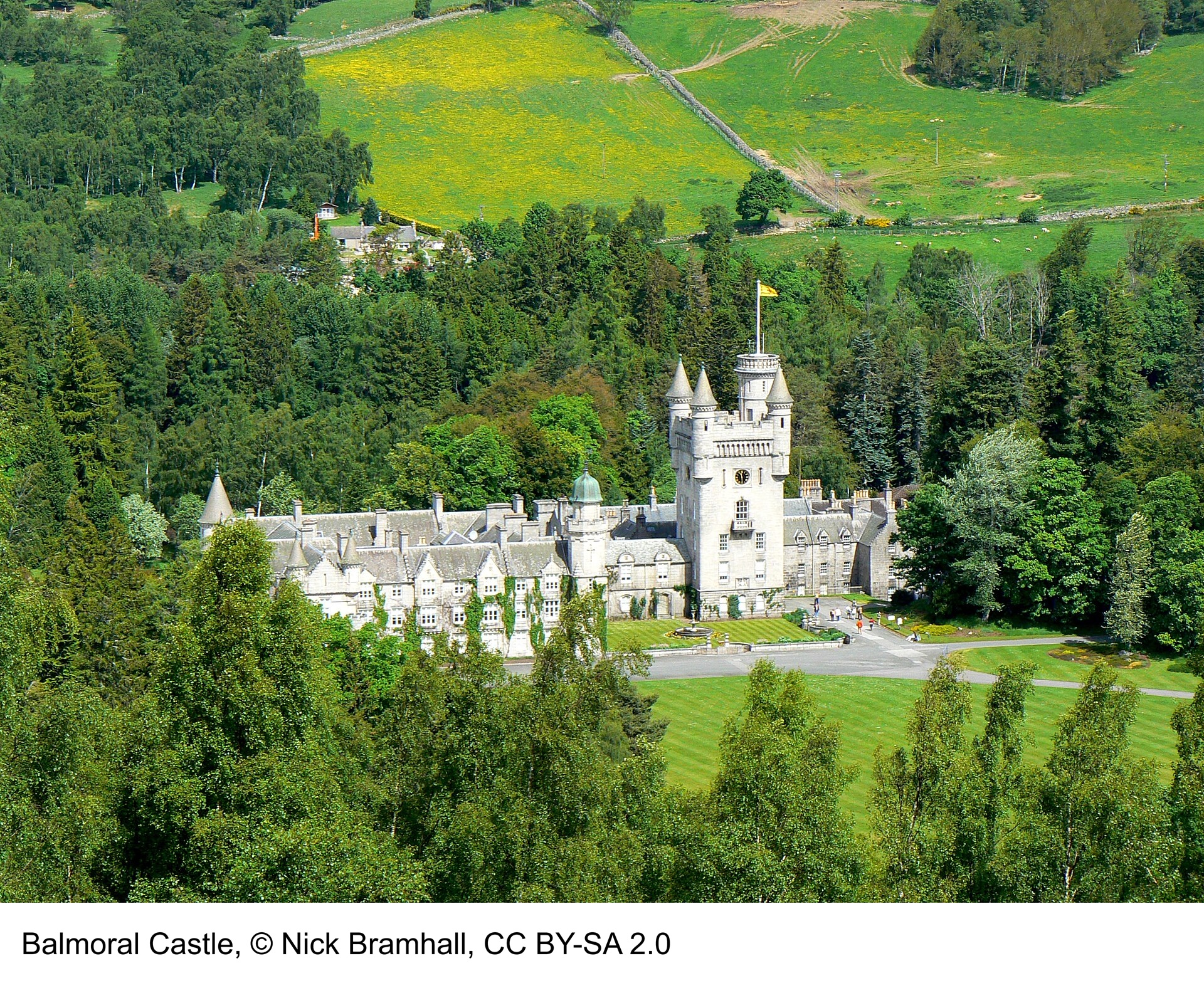 Another type of commemorative name is connected with royalty, often functioning as a public display of loyalty to the Crown. One such name introduced to Belfast is Balmoral, which refers to the royal estate in Aberdeenshire, Scotland, closely associated with the British monarchy. Balmoral was purchased in 1852 by Prince Albert as a private property for Queen Victoria. They had a new castle built, completed in 1856. The name evokes the Highland landscape, retreat, and privacy. In the same year, the name was brought to Belfast for Balmoral Terrace on Great Victoria Street (Henderson's Belfast Street Directory). Two years later, in September 1858 a new railway station named Balmoral was opened on Stockman's Lane, two miles from Belfast. This seems to be the first usage of the name in South Belfast. It later became the name of a suburb, but this seems to have occurred in an unplanned way since there does not seem to have been a single developer responsible.
Personal Association: McConnell & Rea’s tour of the Holy Land, 1890
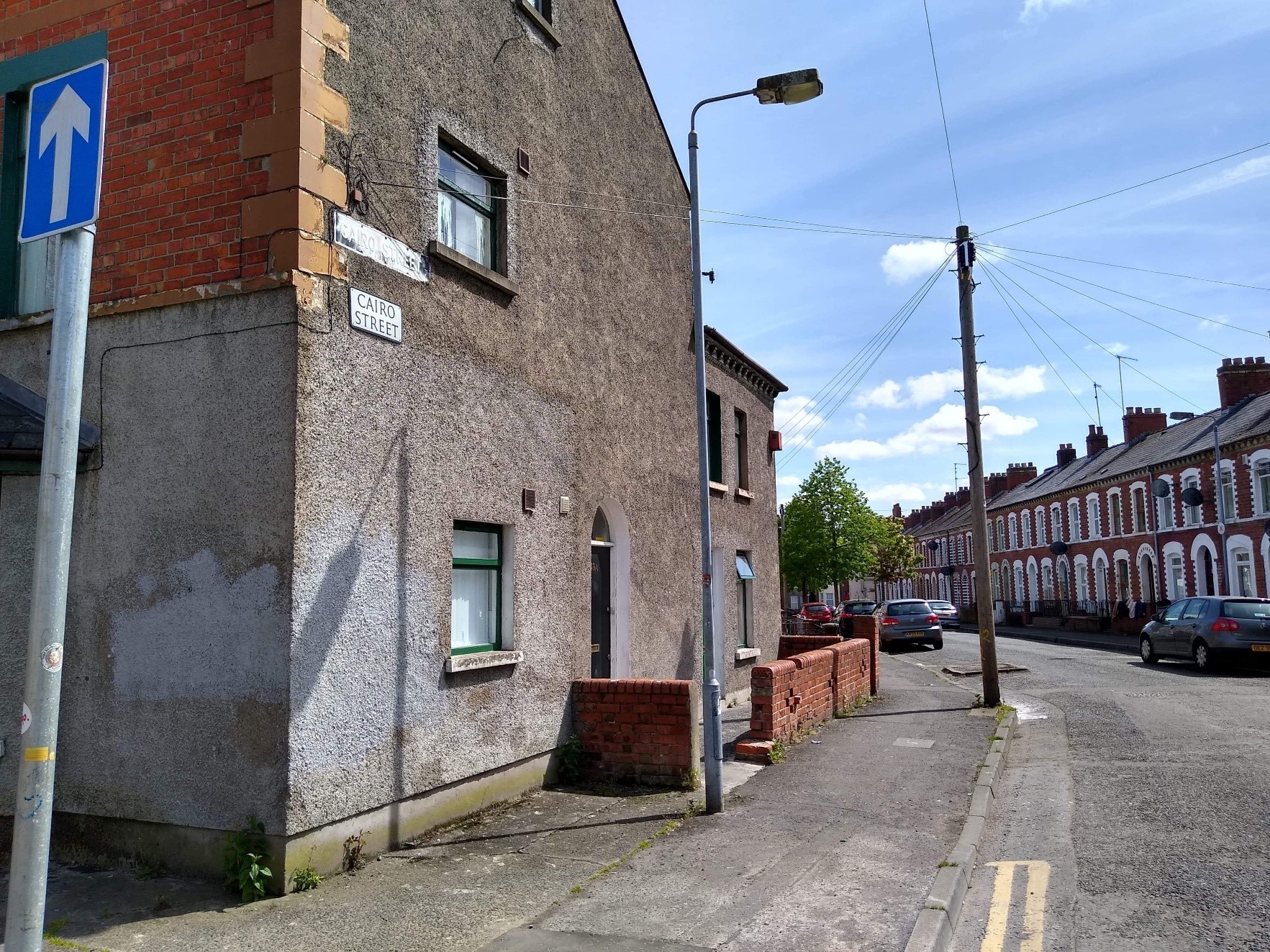 A different kind of motivation lies behind some other names which are due to a personal association rather than a spirit of public commemoration. One of the best-known clusters of this type is in the neighbourhood in South Belfast called “The Holy Land”. These streets owe their names to a tour made by the developer, Robert J. McConnell (1853-1927, later Sir Robert McConnell), and the builder Mr James Rea (c. 1847-93). Their tour may have been inspired by a quite arduous and well-publicised tour of the Holy Land made by Prince Albert Victor and Prince George of Wales (later to become King George V) in 1882. The streets in question are:
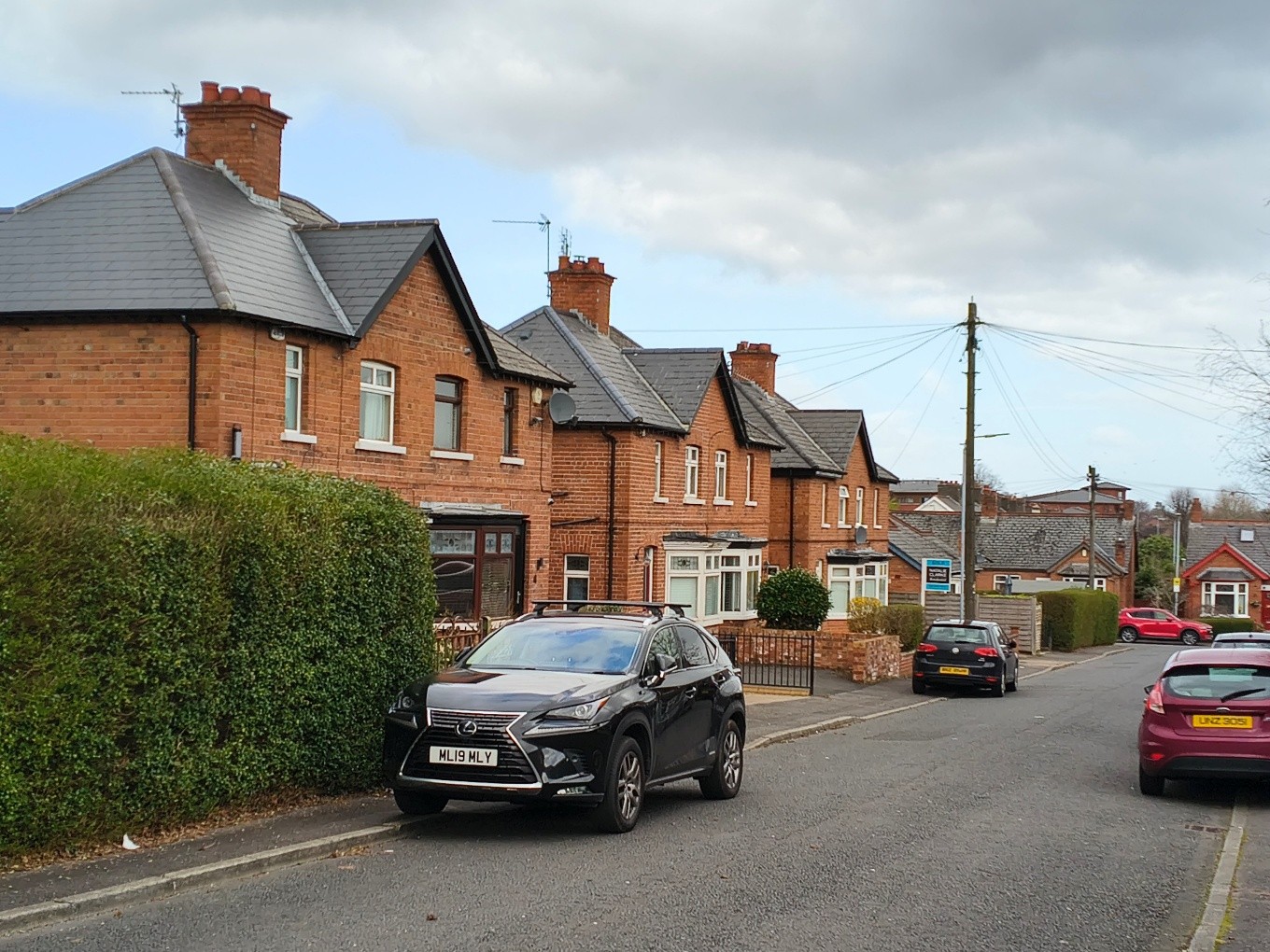
Cairo Street (approved 1891, application: James Rea, photo above)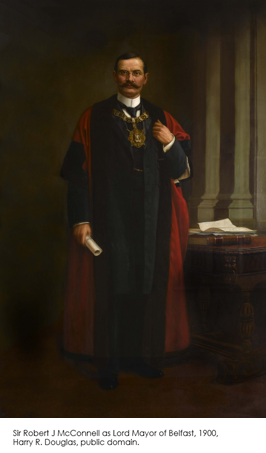
Damascus Street (approved 1892, James Rea)
Jerusalem Street (approved 1892, James Rea)
Palestine Street (approved 1894)
Carmel Street (approved 1894)
They are explained as follows by Marshall: “Holy Land: About 1890 Sir Robert J. McConnell, estate agent, and James Rea, a builder of small house property, went together on a trip to Egypt and Palestine. Upon their return James Rea commenced building on a still unoccupied portion of the Plains. With his Oriental tour fresh in mind he named some of the streets after places he had visited, viz. Carmel Street, Cairo Street, Damascus Street, Jerusalem Street, and Palestine Street” (Marshall, 1941b).

Damascus Street in Belfast Corporation Minutes, 13/04/1892
Marketing? Riverside streets in Stranmillis
Another motivation for naming streets after far-away places is marketing. This may sometimes be suspected but can be harder to prove. It should also be borne in mind that these categories may not always be watertight but may sometimes combine. For example, a developer may have a personal association with a place which is subsequently used in a marketing ploy. This is the case with the name Cliftonville, coined by architect Thomas Jackson, who was so impressed by the residential area of Bristol called Clifton. Jackson had trained as an architect in Bristol before coming to Belfast. Cliftonville was a cluster of Georgian villas, Jackson’s first major residential venture in Belfast (Marshall, 1941a).
 One group which can be fairly securely taken as an example of marketing consists of:
Lucerne Parade (approved 1925, application: Lagan Vale Estate Brick & Terra Cotta Works, Ltd.)
Geneva Gardens (ditto, photo right)
Penge Gardens (ditto)
“Read letter, dated 15th inst., from the Lagan Vale Estate Brick & Terra Cotta Works, Ltd., renewing their application for the approval of proposed names of new streets on their property situate off Stranmillis Road. The Committee having re-considered the matter, it was Resolved – That the names submitted be approved, viz., Sharman Road, Lucerne Parade, Prince Edward Park, Geneva Gardens, and Penge Gardens” (Minutes of the Town Improvement Committee, Belfast Corporation, 16th June 1925).
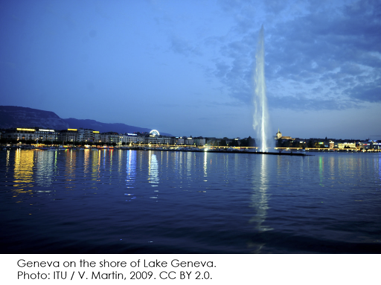 The probable name origin is as follows: Lucerne and Geneva are not only both in Switzerland, but are also lakeside cities, and the lakes in question are named after those cities (Lake Geneva, Lake Lucerne). Lucerne, in particular, has a great cachet as a resort because it attracted international artists, such as J.M.W. Turner in the early 19th century. This prestige was added to when Queen Victoria spent 6 weeks there in 1868 to recuperate, a stay which mark
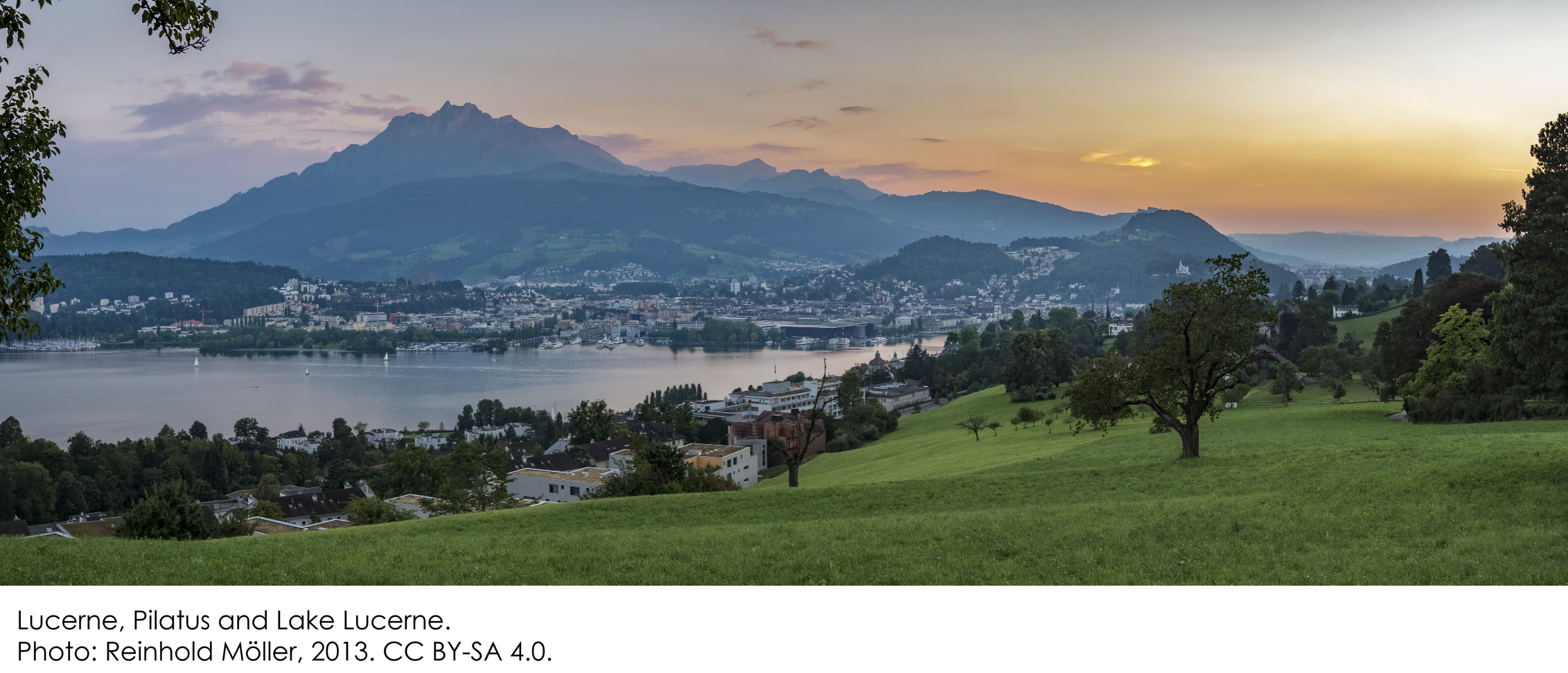 ed the end of her long period of mourning for her husband Albert, who had died seven years earlier. Geneva too attracted artists such as the polymath John Ruskin, who sketched architecture and landscape during his stay.
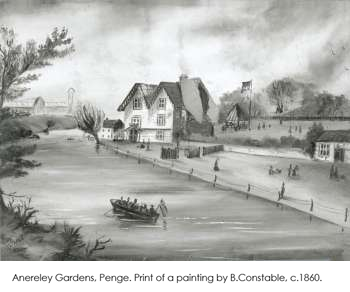 It might be thought impossible that Penge Gardens fits into this theme. Penge is in South London. However, it formerly had a Swiss-style building used as tea rooms and a hotel (in Anerley Pleasure Gardens).
The estate’s European‑sounding street names—Lucerne, Geneva, Penge (a London district with Swiss associations)—appear to be marketing ploys, suggesting a closeness to wild nature, healthy fresh air and continental elegance to potential buyers. Incidentally, Penge Gardens has a similar motivation to Sydenham in East Belfast, which was originally a house-name. Sydenham is near Penge in South London. After the Great Exhibition of 1851, the Crystal Palace was moved to Sydenham in 1854. This name was applied to a house in East Belfast no later than 1856, probably due to the prestige of Sydenham in Kent, which had been brought into focus by the recent re-location of the Crystal Palace. The name was then transferred to street-names in East Belfast and then extended to the surrounding districts by builder/developer James Entwistle. The Crystal Palace was visible from Penge, about a mile and a half away.
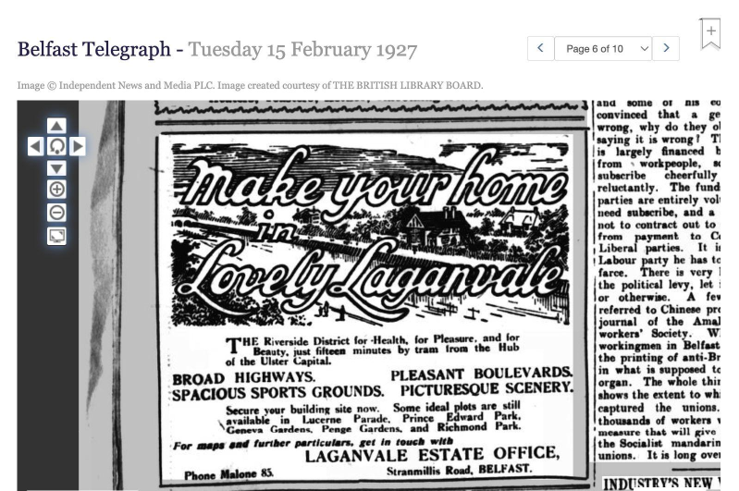 The Swiss-inspired marketing strategy for Laganvale is confirmed by a newspaper advertisement in the Belfast Telegraph, 15/02/1927, which carries the slogan “Make your home Lovely Laganvale” over a sketch showing a house on the edge of an expanse of water. This sketch bears a striking resemblance to an 1860 painting of Anerley Gardens, Penge, with its “Swiss Cottage” tea rooms.
Lake District names
A further example of thematic naming appears in the area around Tennent Street in North Belfast, where several streets were named after towns and villages in England’s Lake District. These names were approved by the Town Improvement Committee of Belfast Corporation in October 1892 as part of a new housing development on land owned by Robert J. McConnell, who was mentioned earlier as the developer of ‘the Holy Land’. This is a good example of marketing by thematic naming in speculative Victorian housing.
Among the names selected were Ambleside Street, Bowness Street, Keswick Street, †Coniston Street and †Ulverston Street, all associated with the Lake District landscape. †Ulverston Street no longer exists and †Coniston Street has been replaced by Coniston Close. In addition to the attraction of fine scenery, these names probably also play on the association with the ‘Lake Poets’, Wordsworth, Southey and Coleridge-Taylor. This is definitely the case with Rydalmere Street (1907) in ‘the Village’ off Donegall Road. This lake is usually referred to as Rydal Water, but was sometimes known by the alternative name Rydalmere, for example in the writings of Thomas de Quincey and Dorothy Wordsworth (‘Ullswater Excursion’, 1823).
Other lakes of the Lake District are referenced in a group of streets developed a few years later off Chichester Avenue in North Belfast: Grasmere Gardens, Windermere Gardens (1907) and Thirlmere Gardens (1916). These were developed by Robert Dunlop. The selection of these names based on lake-names ending in -mere suggests a deliberate thematic scheme for the development.
It could be argued that developers draw on well-known British tourist landscapes to lend an aspirational tone to new housing. By borrowing names associated with scenic beauty and literary fame — particularly the Romantic associations of this area with the ‘Lake Poets’ — even modest terraces could acquire a more attractive identity in the property market.
Arosa Parade
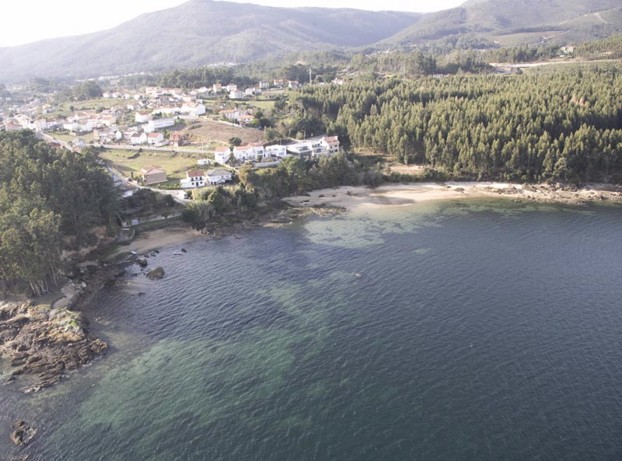 Tourism also appears to have played an important role in the marketing for Arosa Parade in North Belfast, a name proposed by Mr Francis Mulligan and approved on 28/10/1930. An appeal in X (formerly Twitter) in early 2024 confirmed that this name refers to Arosa in Galicia (also spelt Arousa in the Galician language), yielding the following results: ‘Arosa Bay was an especially picturesque and familiar anchorage on the west coast of Spain, esp. to Royal Navy’ (message from Edward Burke, Assistant Professor in History of War, at UCD).
Another message came from J. J. O’Neill, who wrote: 'Arosa Bay was a destination for cruises from Belfast - this is from Northern Whig, 30/3/1930, just before Arosa Parade was named.' Mr. O’Neill posted a copy of an advertisement for cruises from Belfast to Galicia.
'Gold-rush names'
A cluster of streets in Lagan Village, off Ravenhill Road, derive their names from mining in Australia. Ballarat Street and Bendigo Street (both 1897) take their names from major gold-fields in Victoria, Australia, whose dramatic rise during the 1850s gold-rush captured global attention. Dunvegan Street (1901) and St Kilda Street (1901, initially called †Flinders Street) also reference Australian mining communities rather than the Scottish originals of these names. The developers here were Messrs Mahaffy and Sawers. Could it be that their adoption in Belfast reflects a broader pattern of ‘boom economy’ naming, in which developers drew on places associated with sudden wealth and opportunity to lend new streets an aspirational character? Such names signalled modernity, global awareness, and the possibility of advancement to prospective residents. It could be argued that taking names that were frequently mentioned in the printed media was not simply commemorative, but also a form of marketing.
Place-names from Continental Europe, Shankill
At first glance, such 'exotic street-names' may appear to have been coined at random, as if by sticking pins in a map of the world while blindfolded. However, there is always a reason for the choice of place-name, hard as it may prove to establish. Some of the issues involved in researching the origins of such names are illustrated by a group of side-streets off the upper part of Shankill Road, which are mainly named after places in Eastern and Central Europe.
Riga Street (name approved 1865)
Pernau Street (approved 1877)
†Moscow Street (approved 1865)
Berlin Street (approved 1872)
Vistula Street (approved 1880)
Danube Street (approved 1877)
Paris Street (approved 1879)
Brussels Street (approved 1879)
The dates when these streets were built proved to be crucial to understanding this group. These had proved a puzzle for several years because they are located close to the streets which commemorate the Crimean War and they appeared to extend an East European theme without being connected to that conflict. When I appealed for help in a group discussion, our secretary Lisa Rea Currie was able to provide a convincing explanation for four of them:
Riga Street (name approved 1865) – Riga, Latvia, hub for flax trade, flax exported to Belfast.
Pernau Street (approved 1877) – Pärnu, Estonia. Pernau, a historical brand of flax fibre exported from Estonia in 19th century.
†Moscow Street (approved 1865) – Moscow, a centre of the Russian textile industry.
The cotton manufacturing industry in Belfast had collapsed in the 1830s due to cheaper machine produced cotton from America and Egypt, so entrepreneurs had gone into linen production instead, relying heavily on imported flax (Attman, 1981).
Berlin Street (approved 1872) – one year after the Unification of Germany and Berlin named as capital.
It therefore seems reasonably safe to treat these four, at least, as commemorative names. Three of them commemorate contemporary or recent trade links related to the textile trade, while the last commemorates a momentous historical event. It is important to note that, while the British reaction to German Unification was mixed (Gladstone vigorously opposed it), there was considerable initial support for it as a counterweight to the expansion of Britain’s greatest rival, France. It came in the immediate aftermath of the Franco-Prussian War of 1870-71, in which Britain had been officially neutral, but largely supportive of Prussia and content to see France defeated. This would change dramatically in the following decades with the rise of German Nationalism.
Lisa commented: “Very serendipitous that two projects I am working on overlapped too! The Russia connection for linen wouldn’t have been on my radar otherwise.” (Lisa Rea Currie, personal message, 19/03/26). The other project she referred to was BEHERE: Belonging, Heritage and Ecology in Ards and North Down: Community Co-Creation with Mount Stewart, QUB and National Trust.
The eventual successful interpretation of this group of names offers hope that other 'hard nuts' can be 'cracked' in future.
References
IHTA xvii = Royle, Stephen A. 2007. Belfast : Part 2, 1840 to 1900 (Irish Historic Towns Atlas, no. 17, eds Anngret Simms, H.B. Clarke, Raymond Gillespie). Dublin.
Attman, A. 1981. ‘The Russian market in world trade, 1500-1860’, Scandinavian Economic History Review 29, 177-202.
Belfast Council Minute Books, 1751-1973, PRONI ref. LA/7/2.
Carson, Ciaran. 1997. The Star Factory. London.
Henderson, Nigel. 2026. ‘Admirals, Generals and Battles’, lecture, 16/04/2026, https://www.belfaststreetnames.com/admirals-generals-and-battles/
Marshall, John J. 1941a. ‘This Belfast Street Was Meant To Be A Canal’, Belfast Telegraph, 04/01/41, p.4.
Marshall, John J. 1941b. , ‘How The Streets of Belfast’s ‘Holy Land’ Got Their Names’, Belfast Telegraph, 24/01/1941, p.4
Marshall, John J. 1941c. ‘Empire Battle Memories’, Belfast Telegraph, 07/03/1941, p.6.
O’Byrne, Cathal. 1982. As I Roved Out : a book of the north : being a series of historical sketches of Ulster and old Belfast. Belfast. 1st edn. 1946.
Tempan, Paul. 2023. ‘Patterns in Belfast Street-Names’, Familia: Ulster Genealogical Review, vol. 39, 2023, pp. 112-130.
Tempan, Paul. 2026. ‘Cliftonville and Altona: Thomas Jackson and the names of two of his projects’: https://www.belfaststreetnames.com/cliftonville-and-altona/
Wilson, Stanley. 1940. ‘War Gave These Belfast Streets Their Names’, Belfast Telegraph, 17/07/1940, p. 4.
Wordsworth, Dorothy. 1823. ‘Ullswater Excursion’, in William Wordsworth, Guide to the Lakes. https://romantic-circles.org/editions/DW/editions.2022.DW.Ulls-C