Cliftonville and Altona:
Thomas Jackson and the names of two of his projects
Paul Tempan
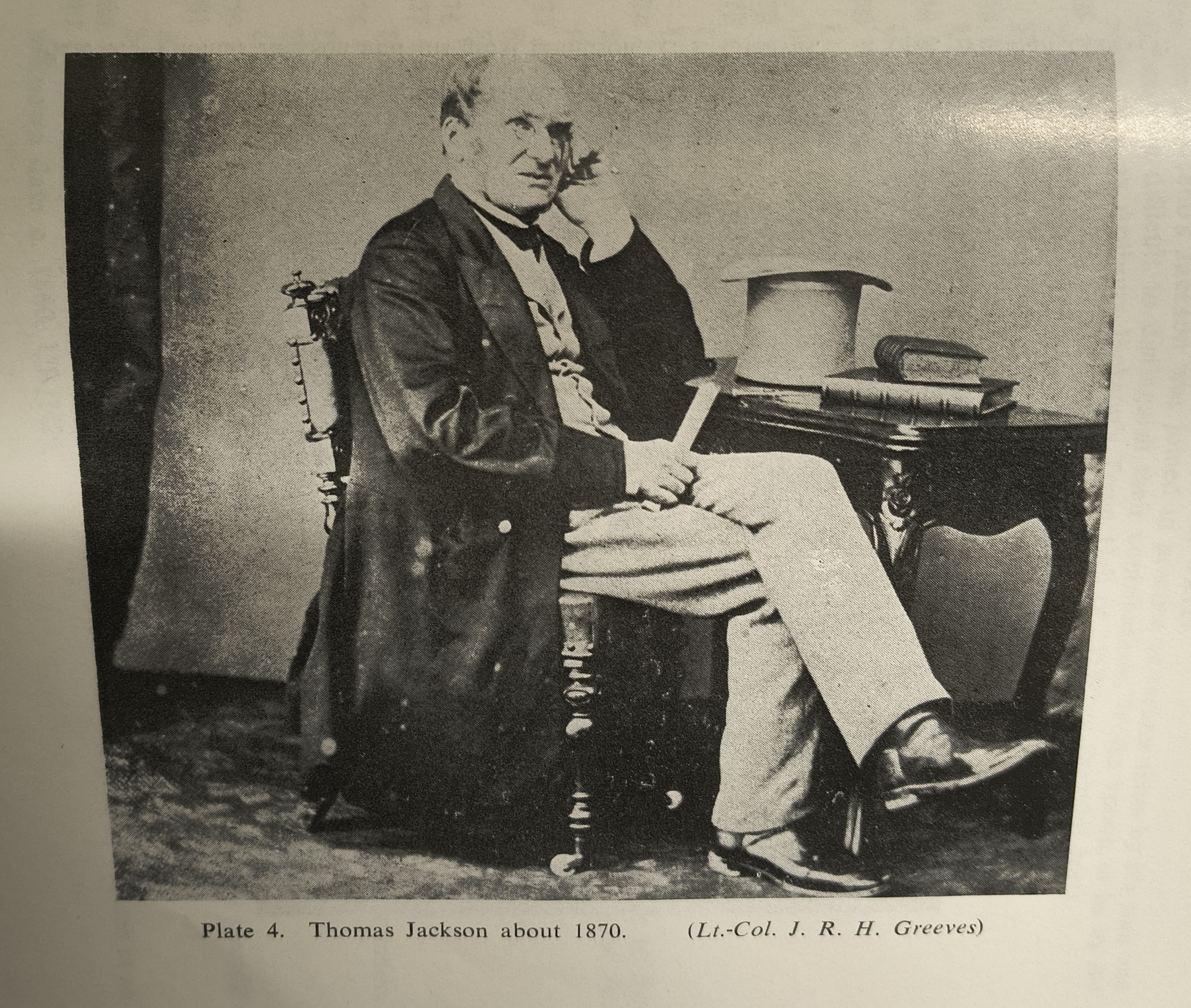
According to John J. Marshall, the architect Thomas Jackson (1807-90) is reported to have been so impressed by the residential area of Bristol called Clifton, that he decided to introduce the name to Belfast (Belfast Telegraph, 04/01/1941).
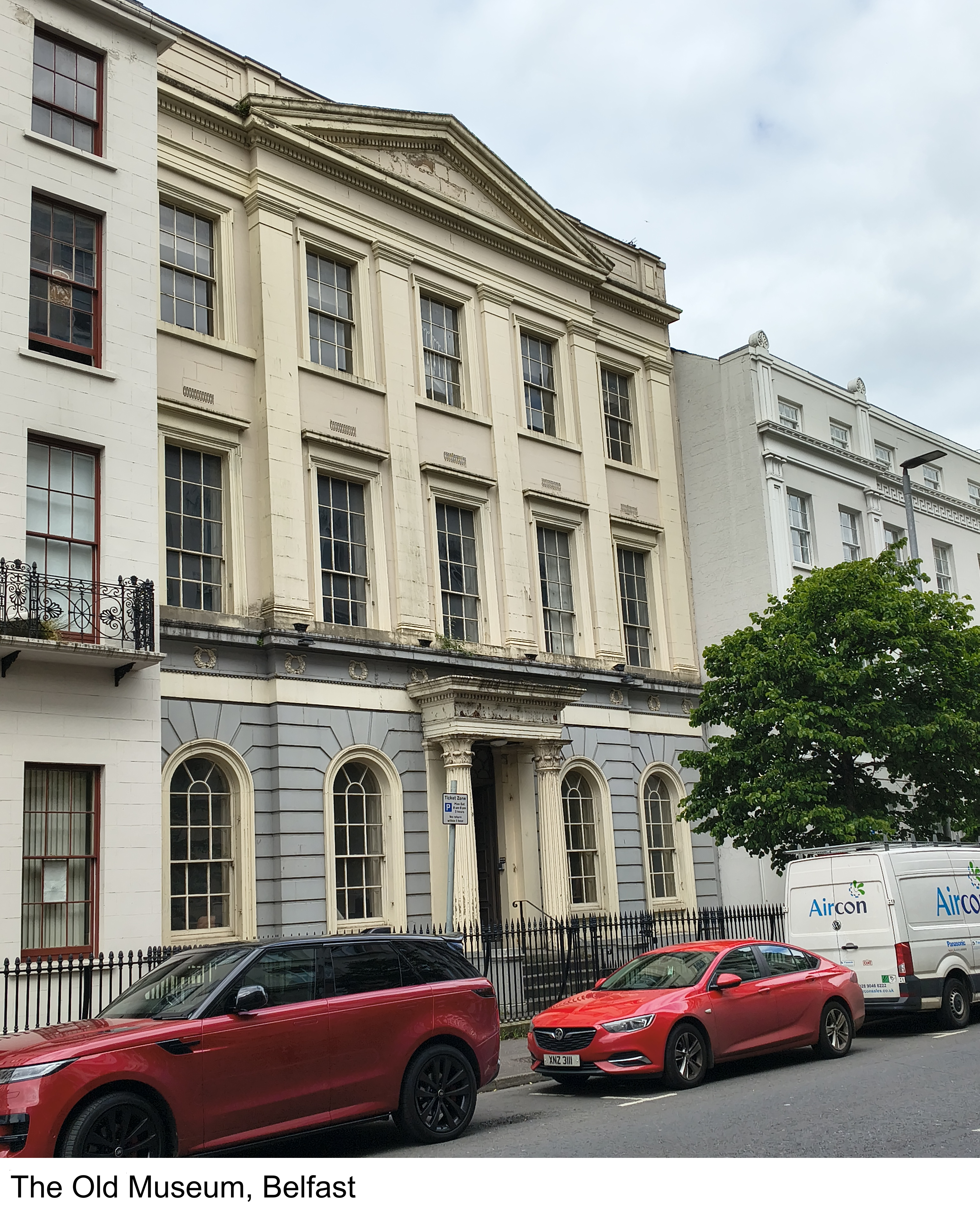 Besides designing individual buildings, most notably the Old Museum in College Square and St. Malachy’s Church, Jackson was responsible for two ambitious suburban developments in Belfast. Thomas Jackson was a Quaker from Waterford who settled in Belfast.
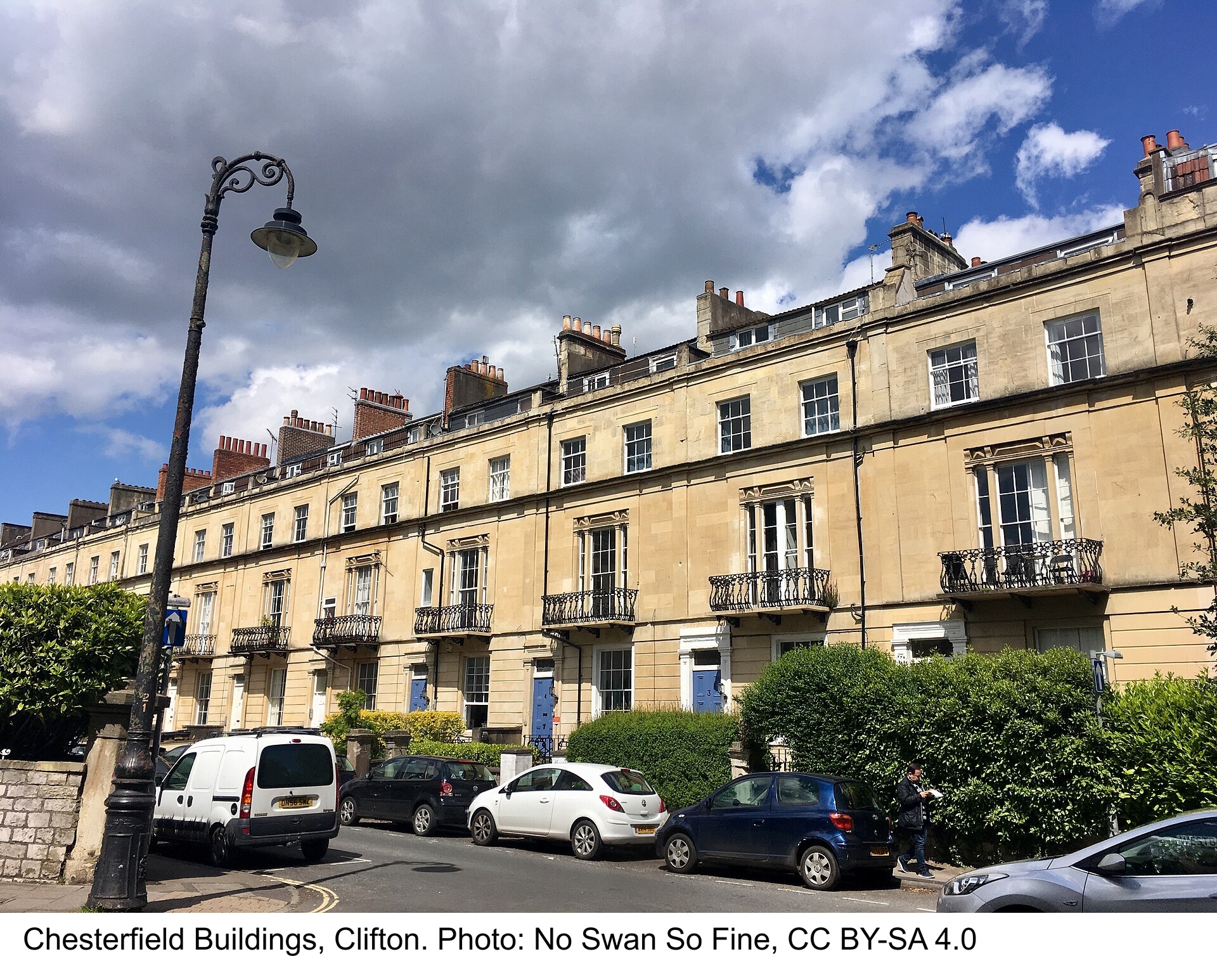
The reason for Jackson’s choice of the name Cliftonville is pretty clear from his life story. Before coming to Belfast, he was articled to an architect, George Dymond, in Bristol. Clifton, now a suburb of Bristol, was then a village to the north-west of the city, further down the gorge of the River Avon. It underwent a great deal of development during the Georgian era, resulting in it becoming attached to Bristol, and it was officially incorporated into the city in the 1830s. Clifton is noted for its fine Georgian architecture, which has strong similarities to that of the nearby city of Bath. It obviously made a strong impression on the young Jackson, whose designs remained mainly, though not exclusively, Georgian in style throughout the Victorian era.
W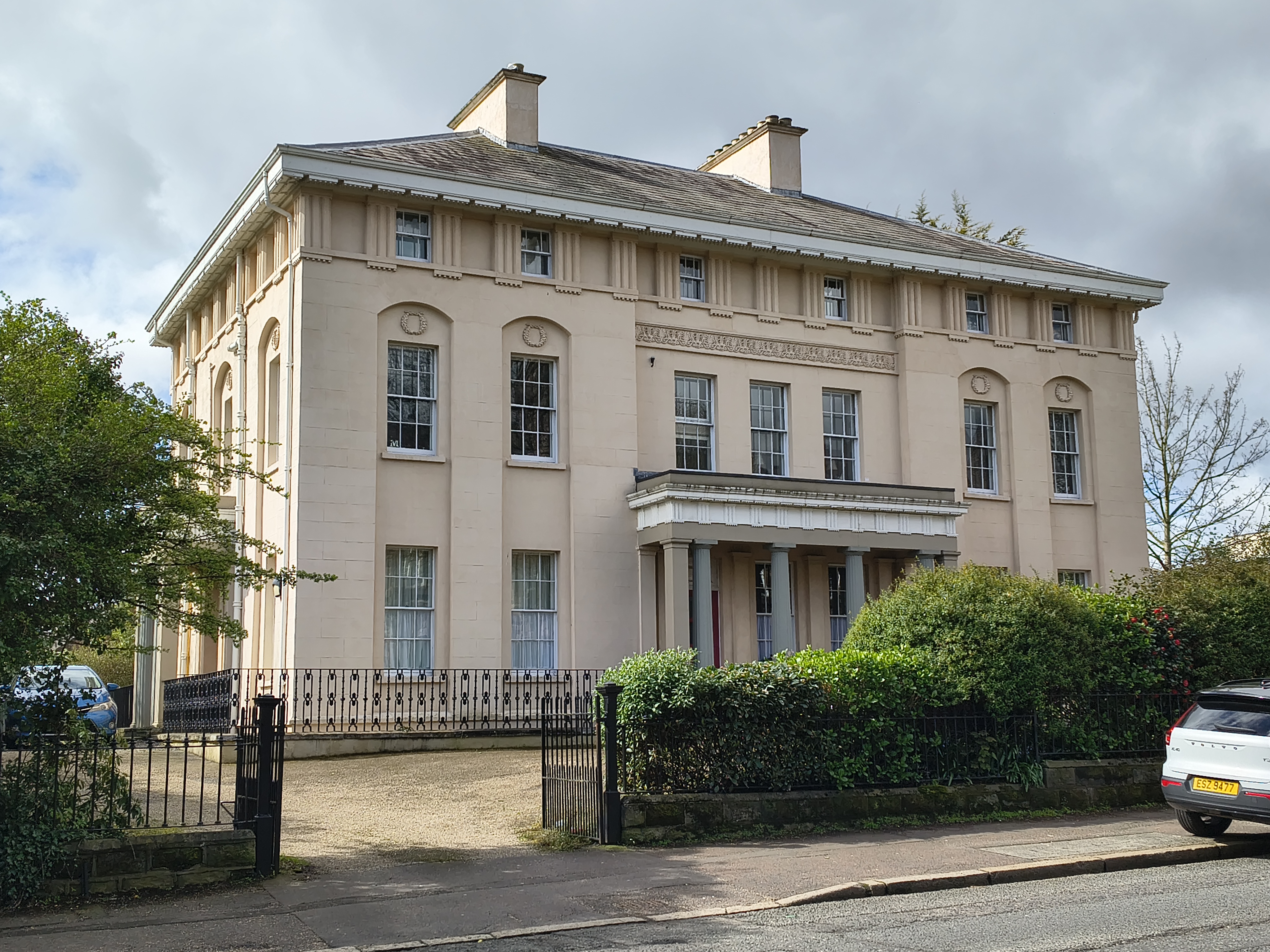 hen Jackson returned to Ireland, he worked in Newry as assistant to the architect Thomas Duff and soon became his business partner. At the age of 24 he designed with Duff the museum building for the Belfast Natural History and Philosophical Society, and was then made an honorary member of the society in 1833 (Weaving Branches). Further biographical details are given in Knock, Knock — Who was there? by Keith Haines (2014: 98-103).
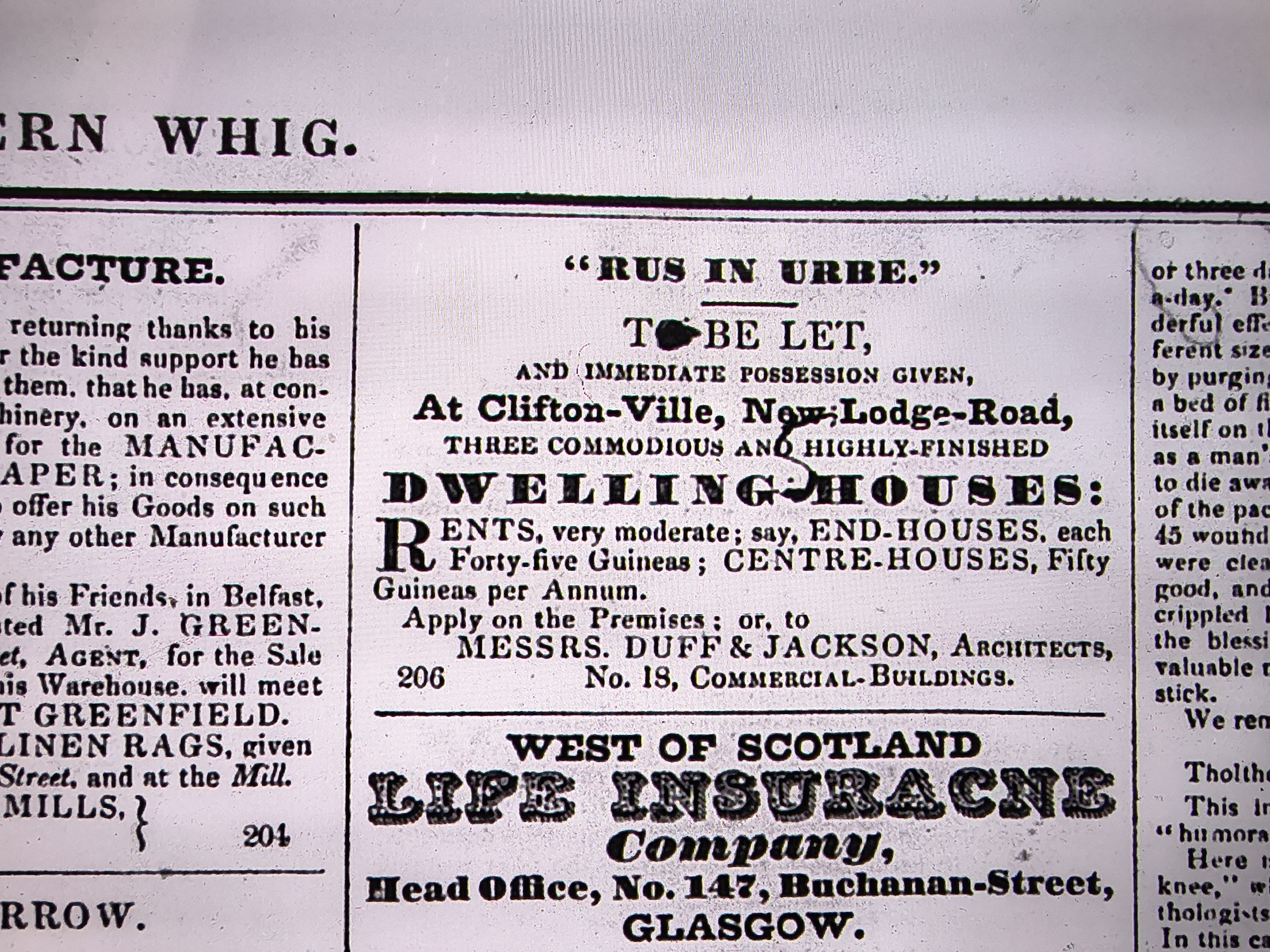 One of Jackson’s first residential projects in Belfast was Cliftonville. These properties were advertised to let in newspapers with the slogan rus in urbe, a Latin phrase meaning "countryside in the town" (e.g. Northern Whig, 01/07/1833), an interesting early documented example of a marketing campaign for housing. Perhaps this reflected the perception of Clifton as a leafy suburb of Bristol, which Jackson aimed to emulate. This is supported by C.E.B. Brett, who described Cliftonville as "a villa estate modelled on Clifton on the outskirts of Bristol" (Brett 1985:33). Other developers would adopt this naming strategy, e.g. James Entwistle, who gave the name Sydenham to a development in Strandtown, East Belfast, in the 1850s (Campbell 2013).
 The Cliftonville development, begun in the 1830s, was only partly carried out as Jackson planned. Building costs rose and the houses and gardens were more restricted than he had planned (Dixon 1974:26). In the Belfast Street Directory of 1839 there is an entry that says: “William Herdman, Esq residence, Cliftonville”. Jackson also built one of the houses for himself and named it Cliftonville Cottage, a detached villa at no. 24, Cliftonville Road, but, unfortunately, this house burned down in 1982 (Hearth). On the 2nd edition OS 6" map (1838-62) the development is named and marked as a row of six detached houses stretching along the south side of Cliftonville Road, from Antrim Road to the current position of Cliftonpark Avenue. The finest remaining example of the development is Clifton Villas, a group of three houses at nos 26-30, restored by Hearth 2010-11. There is also a semi-detached pair at nos 34-36.
https://hearthni.org.uk/projects/clifton-villas/
The name Cliftonville was widely adopted and is found in addresses in several different British cities, but Belfast’s Cliftonville seems to be the earliest. In Margate, Kent, it was adopted as the name of an architecturally distinctive district of the town. It is mentioned in the third verse of John Betjeman’s poem “Margate, 1940”:
How lightly municipal, meltingly tarr’d,
Were the walks through the lawns by the Queen’s Promenade
As soft over Cliftonville languished the light
Down Harold Road, Norfolk Road, into the night.
https://kentliterature.com/john-betjeman-margate-1940/
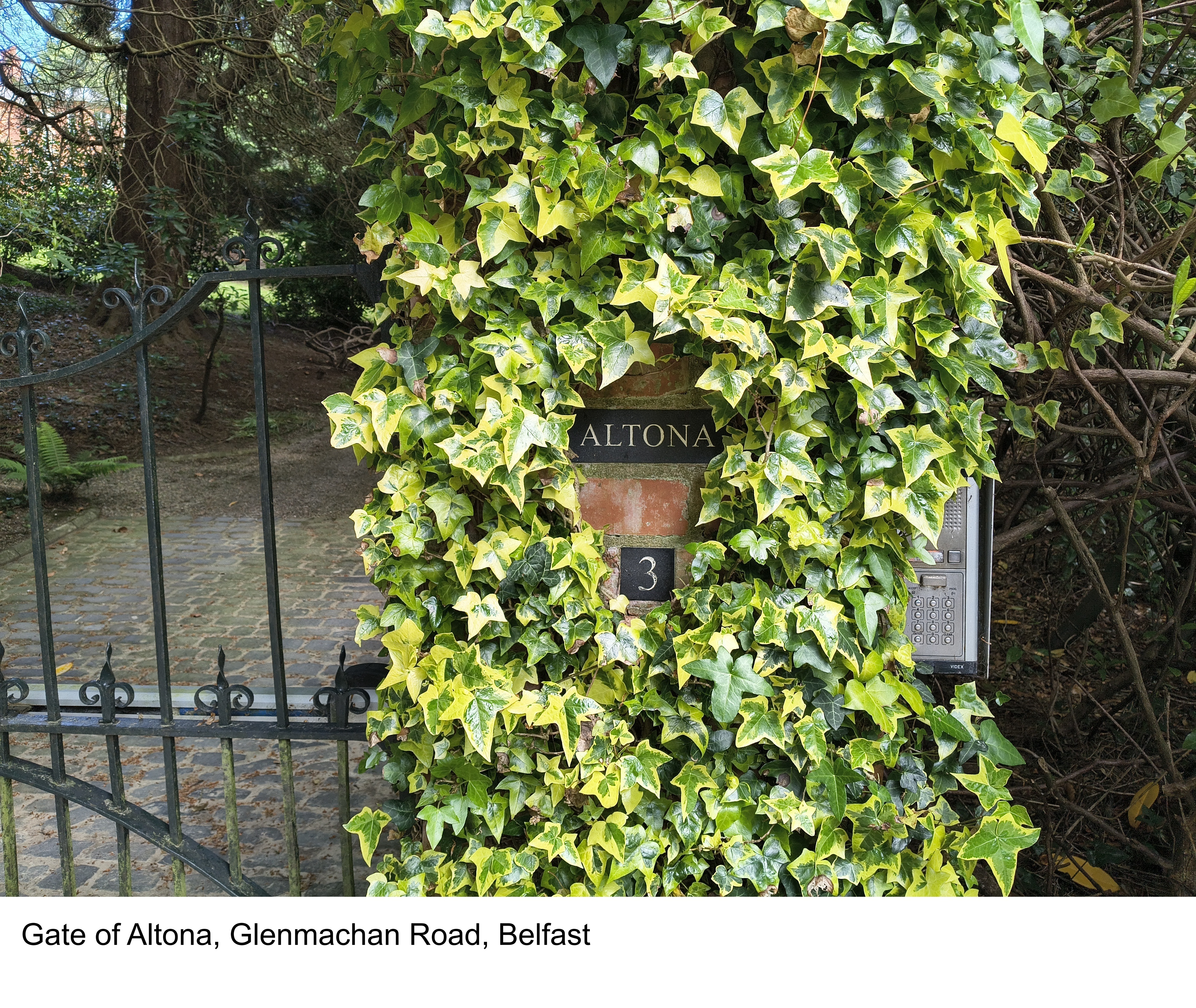 Later, from circa 1861, Jackson created a development of large houses in spacious grounds to the east and west of Old Holywood Road on the north-eastern edge of the city. These included Glenmachan House for Sir William Ewart, Glenmachan Tower for Sir Thomas McClure and Glen Ebor for Jonathan Cordukes. Glen Ebor was renamed Hampton in the 20th century and won the BBC’s “House of the Year Show” in 2024. Jackson also designed Lismachan for James Shaw, Tweskard for Thomas Malcolmson Greeves (his son- in-law) as well as Altona for himself, built in 1864 (Dixon 1974:28-30). Today it is a red brick house but a late 20th century photograph shows it faced with white plaster, which gave it more of a neoclassical look (Rankin 2012: 9). The names of the other residences were presumably chosen by the owners, but it is safe to assume that Altona was a name chosen by Jackson himself. Like Cliftonville, Altona is also inspired by an architectural model. However, the circumstances of the influence are less clear in this case. Unlike Cliftonville, the name Altona is not commented on by any of Jackson’s biographers. Altona is a suburb of
 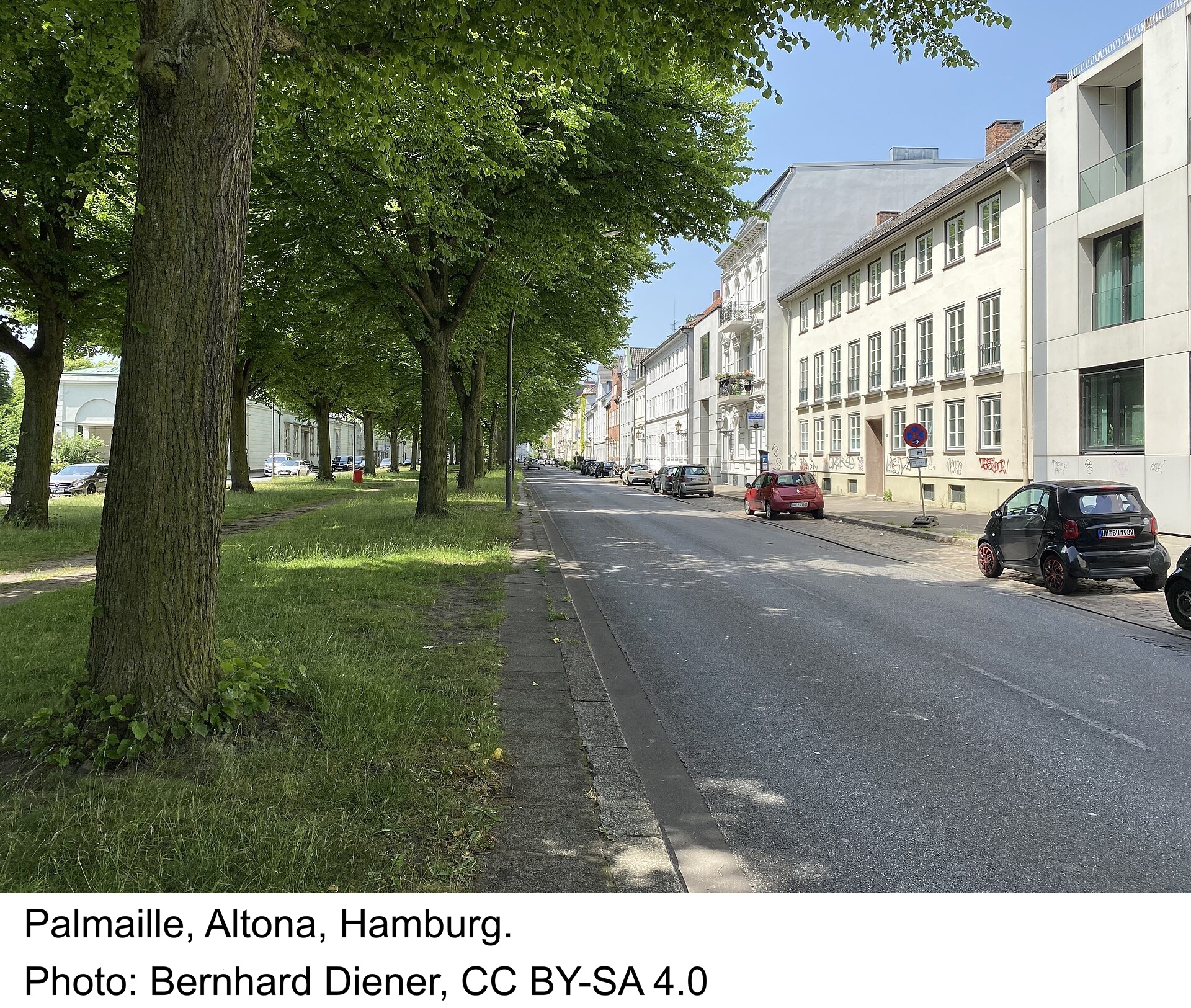 Hamburg noted for its architecture of various styles. During Jackson’s lifetime the most notable address in Altona was probably the avenue called Palmaille, considered one of the finest examples of an urban neoclassical development in Northern Europe. This street developed in the 1630s but it acquired its neoclassical style in the 18th and early 19th centuries, particularly due to the splendid residences built for wealthy merchants by Christian Frederik Hansen. At this time (before the unification of Germany in 1871), Altona was part of the Duchy of Holstein and its political ties were with Denmark. Altona was promoted by Danish monarchs as a rival to its neighbour, Hamburg. Did Jackson ever visit Altona? Or was he simply impressed by images he had seen, or perhaps architect’s plans? At present I do not have an answer to this question, and maybe it will remain unresolved, but perhaps there is someone, a historian of architecture or a family member, with inside knowledge. If so, we would love to hear from you.
References
Brett, C. E. B. 1985. Buildings of Belfast, revised edn. (1st edn. 1967) Belfast.
Campbell, Aidan. 2013. Sydenham: An illustrated and spoken history of Sydenham, Holywood Road and Victoria Park. Belfast.
Dixon, Hugh. 1974. “Honouring Thomas Jackson, 1807-1890 (Architect)”, Proceedings and Report of the Belfast Natural History and Philosophical Society, Sessions Second Series, 1970/71 - 1976/77, pp. 23-31.
Haines, Keith. 2014. Knock, Knock — who was there? A brief history of Knock, Belmont and Strandtown and the people who lived there, pp. 98-103. Donaghadee.
Marshall, John J. 1941. “This Belfast Street Was Meant To Be A Canal”, Belfast Telegraph, 04/01/41, p.4.
Rankin, Kathleen. 2012. The Linen Houses of County Antrim & North County Down. Belfast.
Advertisement of houses to let at Clifton-Ville. 1833. Northern Whig, 01/07/1833, p. 3.
Weaving Branches = https://weavingbranches.wordpress.com/2014/06/30/thomas-jackson-belfast-architect-part-1/
https://weavingbranches.wordpress.com/2014/07/09/thomas-jackson-belfast-architect-part-2/
Hearth = https://hearthni.org.uk/projects/clifton-villas/
https://kentliterature.com/john-betjeman-margate-1940/
About Paul Tempan
Paul Tempan has lived in Belfast since 2001 and has travelled Ireland as a hill-walker and as a tour guide. He undertook doctoral research on Irish place-names at Queen's University Belfast (2007-11) and worked as a research assistant, later a research fellow, at the Northern Ireland Place-Name Project (2006-13). He now works with Libraries NI and is an independent researcher.